

The Project
Project concept and ambition
Heating and cooling in our homes, cities, industries represent 50% of the total EU energy demand with 75% coming from fossil fuels. Accelerating the decarbonisation of the sector and harnessing available renewable sources and innovative solutions is vital to achieve climate neutrality as required by the FitFor55 Package.
District heating and cooling (DHC) is a major solution allowing to integrate renewable and waste heat sources as well as contribute to sector integration and provide flexibility to the electricity market, but these benefits can only be maximised via the integration of thermal energy storage solutions.
USES4HEAT aims to demonstrate innovative, large scale, underground seasonal thermal energy storage (UTES) solutions enabling a future decarbonised and reliable heating supply. It will prove the effectiveness, techno-economic-social viability of seasonal UTES ensuring limited CAPEX and reduced environmental impact and energy losses. The UTES units will be efficiently integrated in local district heating networks harvesting locally available renewable sources of heat such as waste heat, solar thermal, geothermal or power-to-heat. The implementation will be facilitated by six key breakthrough enabling technologies.

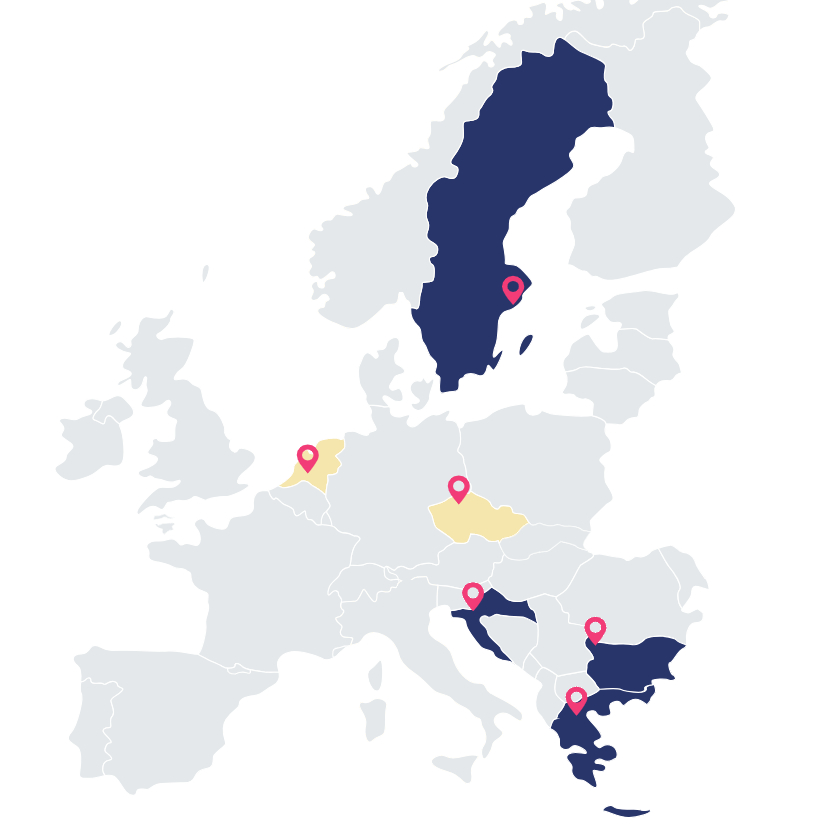
Demonstration sites
and replicators
USES4HEAT will implement two demonstration sites, in Andel (The Netherlands) and in Litomerice (Czech Republic), each of which is adapted to local contexts harnessing available renewable sources and using a variety of technologies. Four replication cases in Zagreb (Croatia), Lom (Bulgaria), Kozani (Greece) and Kvarnholmen (Sweden), will follow suit and learn from our demonstrators aiming at identifying the potential of the developed solutions in a broader EU wide context.
key enabling technologies

Objectives

Demonstrate two innovative large-scale cost-effective seasonal thermal energy storage technologies to decarbonise heat supply

Demonstrate key enabling technologies for increased flexibility, availability and robustness of the heating sector


Assess the performance and sustainability of the solutions from a holistic perspective including circular, social, economic, financial and environmental aspects

Promote the solutions across EU and beyond and facilitate market uptake and wide-spread commercialisation